

The power of end-to-end supply chain leadership


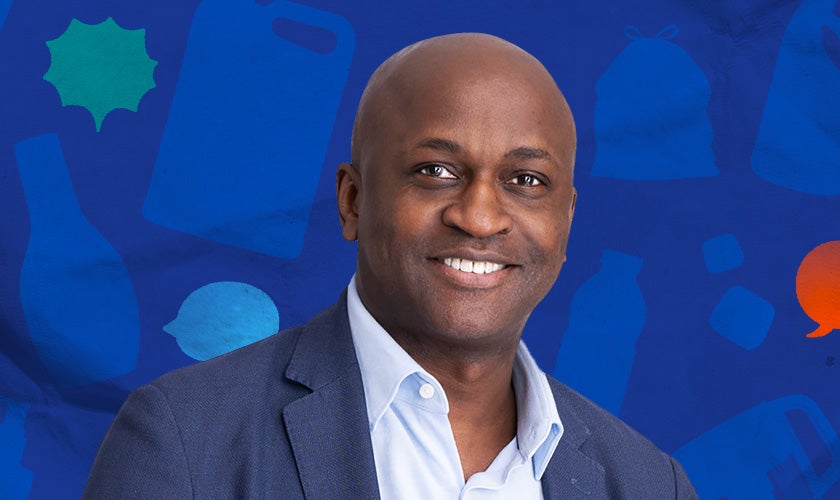
Supply chains have evolved far beyond manufacturing to being a competitive advantage for companies. In a recent episode of The Momentum Flow podcast, Pascal Montilus, senior vice president and chief supply chain officer, shared how embracing an end-to-end perspective drives growth.
He also underscored the importance of harnessing technology, including artificial intelligence (AI), and operating our supply chain with a future-fit lens to enable Clorox to thrive in dynamic environments. Throughout the conversation, Pascal emphasized that connecting to business strategy, delivering value for consumers and customers, and leveraging our teammates’ expertise are critical to modernizing our supply chain.
Highlights from Pascal’s perspective
What experiences have shaped your leadership approach?
Early in my career as an electrical engineer, my focus was on delivering projects and solving technical problems. Along the way, I realized that while technical expertise is foundational, leadership requires a much broader perspective. You need those technical individuals who can deliver on the fundamentals. But I learned it’s equally important to bring in the people aspect – leadership, and importantly, connectivity – to your business goals and ambitions.
What lessons have you learned from working across different cultures?
Early in my career, much of the supply chain expertise was North America- and U.S-centric. As I worked globally, I saw firsthand how different perspectives strengthen organizations. People think differently and bring different contributions, while at the same time, we’re all delivering on the business together.Those experiences expanded my thinking, not only geographically, but culturally and individually. The biggest lesson is that we have to remain humble because we learn from others, and that allows us to innovate and perform better.
How has your definition of end-to-end supply chain evolved?
The definition has expanded dramatically. It has changed from how to maximize manufacturing to end-to-end thinking, from demand generation all the way to shelf. Today, supply chain is deeply connected to growth, consumer and customer experience, and business strategy. It’s from the insights of what consumers need all the way through how we deliver for them at the right price and in a differentiated way.
That broader view is something future leaders need to embrace. Supply chain is not only a function. It’s a catalyst for what an organization can aspire to be.
What role does technology play in transformation?
It’s crippling not to have the right amount of technology, especially in the world we live in. But technology by itself doesn’t transform companies. True transformation happens when technology, processes and teammates work together. It’s about process and how we re-engineer to deliver value. It also has to be married to teammates. Technology is a must, but teammates’ capability and process engineering create the ecosystem that delivers results.
What feels different about AI compared to previous technology waves?
AI gives teammates new opportunities to innovate and solve problems. It provides a force multiplier because every teammate, with the right technology stack and governance, is empowered to bring big ideas and major discovery points.
How has your view of resilience changed over the years?
Resilience has become a defining characteristic of future-ready organizations. Today, it’s our lens for building a future-fit supply chain at Clorox. For resilient organizations, change becomes an advantage rather than a setback. We embrace change as opposed to complaining about it, embedding it in our DNA as a competitive advantage.
What leadership principles remain constant?
Integrity remains the foundation. Do the right thing, always. That’s super important. The other enduring priority is talent. You can only succeed with the right teammates. Understanding your talent pipeline, their capabilities and the needs of the future allows you to be better prepared than anyone else.
What capabilities will be most important for future leaders?
Leaders need a broad enterprise mindset. We all need to push and pull in the same direction. It’s important to have an end-to-end view of the business. That means combining strategic thinking with new skills, such as digital and AI fluency, financial acumen and the ability to collaborate across functions.
What creates momentum in an organization?
At its root, momentum is generated by big ideas. But sustaining it requires capable teammates, strong communication and disciplined execution. Organizations must have embedded capabilities. They have to train, provide tools and execute flawlessly, then correct course and execute again. And ultimately, leaders should never underestimate the power of creating positive energy. We all want to be winners. Winning is fun. We just want to win.
Want to learn more? Listen to the full podcast here.
